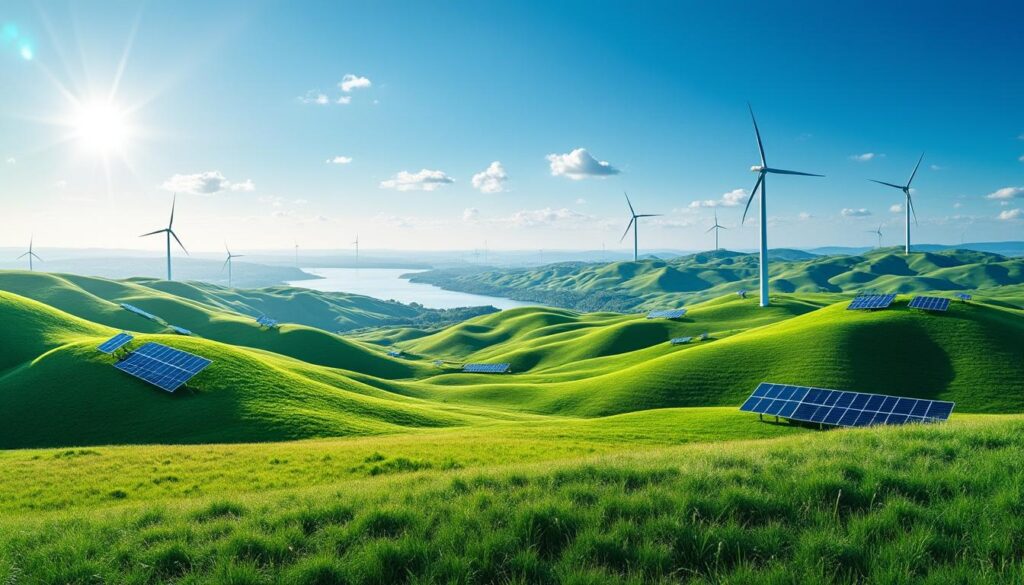
Urgency is not a slogan: it is the engine that unlocks decisions, shortens deadlines, and converts opportunities into real renewable capacity. When time matters, the right choices become simpler, practical, and measurable.
| Short on time? Here’s the essentials: | |
|---|---|
| ✅ Priority | 💡 What to do now |
| Triple renewable capacity by 2030 🌍 | Streamline permits, strengthen networks, and unlock storage 🔋 |
| Regulatory predictability 📜 | Clear timelines, auction windows, and stable rules for PPAs 🤝 |
| Integration with efficient buildings 🏡 | Retrofit, install solar, and manage loads intelligently ⚙️ |
| Investor confidence 💶 | Reduce bureaucracy, meet deadlines, and ensure rule stability ⏱️ |
Urgency as an essential engine for the advancement of renewable energies: why accelerating now brings immediate benefits
When governments, municipalities, and investors feel the clock ticking, decisions gain clarity. The international goal of tripling renewable capacity by 2030 forces the cutting of steps that do not add value and focuses on the essentials: connecting projects, strengthening networks, and compensating for flexibility. In Portugal, the ground is fertile: availability of sun and wind, accumulated know-how, and a civil society attentive to energy costs and decarbonization.
The signs are there. In 2023, hydropower accounted for 27% of the electricity produced, and the Tâmega complex proved that the country can execute world-class projects. The update of targets at COP and international recommendations regarding critical mineral supply chains add an ethical imperative: expand renewables, but with transparency, human rights, and justice in the value chain. The urgency is not only climatic; it is also economic and social.
From vision to action: steps that multiply impact
Without predictability, no one accelerates. Without grids, there is no integration. And without storage, the renewable production curve does not match the consumption curve. Therefore, the three decisive levers are clear: license faster, strengthen and digitalize the grids, and pay for flexibility adequately. By doing so, systemic costs are reduced, and space is opened for more wind, solar, and biogas.
- ⚡ Streamline permits with deadlines and public checklists.
- 🔌 Digitalize the grid and encourage demand response in buildings and industries.
- 🔋 Prioritize hydropower pumping and batteries where they make the most sense.
- 🤝 Stabilize PPA rules and energy communities.
- 🏘️ Scale energy rehabilitation to reduce peaks and save on bills.
| Lever 🚀 | Direct benefit ✅ | Practical example 🧩 |
|---|---|---|
| Fast licensing | Lower capital cost | Single digital window for solar and wind |
| Networks and flexibility | More renewables without curtailment | Dynamic rates and consumer aggregators |
| Storage | More stable prices 🏷️ | Tâmega (pumping) + distributed batteries |
| PPAs and communities | Predictability for investment | Condominiums with collective self-consumption |
If you are looking for a starting point, focus on deadlines and predictability; they are the silent fuel of renewable acceleration.
Diving into storage helps prepare the ground for the next topic: how to decide between batteries and hydropower pumping based on systemic value.
Storage and grids: the urgency that balances the system and reduces energy costs
Storing is transforming cheap energy into availability when it is worth more. Pumped hydroelectricity provides long hours of discharge and system services, while batteries shine in quick responses and peak management. In both cases, urgency counts: the sooner they are operational, the sooner they stabilize prices and integrate the new solar and wind capacity that comes onto the grid.
The example of the Tâmega Project — with dams in Gouvães, Daivões, and Alto Tâmega — showed that Portugal can compete with the best. The estimated investment of 1.5 billion euros is providing invaluable service to the system: regulating renewable flow, reducing imports, and strengthening energy independence. To multiply such cases, predictability of remuneration and flexibility auctions becomes critical.
Batteries, water, and buildings: an ecosystem that breathes together
It is not about choosing one technology, but about making them collaborate. Pumping covers long windows and seasonality; batteries respond in seconds and minutes; load management in buildings fits consumption into hours of clean and cheap energy. Together, they accelerate renewable integration, limit production cuts, and create a more stable pricing curve for families and businesses.
- 🧠 Schedule heat pumps and hot water systems for hours of high solar production.
- 🚗 Charge electric vehicles at night or noon, depending on the rate.
- 🏭 Use industrial batteries to smooth out peaks and sell services to the grid.
- 🏞️ Invest in pumping stations where there is hydro potential.
- 📊 Adopt smart meters and dynamic tariffs.
| Technology 🔧 | Main strength 💪 | Limitation ⚠️ | Optimal use 🎯 |
|---|---|---|---|
| Pumped hydroelectricity | Long hours, system services | High CAPEX, restricted location | Flexibility backbone of the system |
| Batteries | Ultra-quick response ⚡ | Degradation and cost per kWh | Peak management, reserve markets |
| Building flexibility | Low cost and scalable 🏡 | Requires automation and tariffs | Load shifting, self-consumption |
By combining these layers, urgency transforms into reliability: more renewables connected, fewer peaks, more predictable bills.

Licensing and predictability: cutting bureaucracy to not miss the renewable train
Projects exist, investors do too; what is often missing is valuable time. Lengthy and unclear processes erode trust and divert capital to more agile markets. Recent interventions in the sector underline the essential: defining deadlines, standardizing requirements, and coordinating entities reduces risk and accelerates the learning curve.
In fast and ultra-fast charging, Atlante has shown how predictability is decisive. In Portugal, the market reveals dynamism and a share of over 20% of new light electric vehicles, well above the approximately 12% in Spain. Nevertheless, the lack of stable rules delays investment decisions and grid connections. The Iberian parallel matters: with interconnected grids, the speed to the south of one border pushes the other to respond.
Coordination that unlocks: energy, environment, and grid speaking with one voice
The country benefits when energy policy, economy, and grid management align. A well-designed auction loses value if public communication discredits it. An efficient environmental assessment loses impact if there is no timetable for grid connection. The solution is practical: digital one-stop shop, transparent checklists, predictable application windows, and a “traffic light” for each area indicating available capacity and estimated timelines.
- 🗂️ Single portal for licenses with visible process states.
- 🧭 Annual calendar of auctions and grid connections published at the beginning of the year.
- 🟢 Network capacity map with quarterly updates.
- 📑 Standard requirements for rooftop solar and energy communities.
- 🤖 Environmental assessment with digital screening and legal deadlines.
| Bottleneck 🛑 | Impact on investment 💸 | Urgent remedy 🩺 |
|---|---|---|
| Undefined deadlines | High regulatory risk | Public SLAs by stage ⏱️ |
| Variable criteria | Rework and extra costs | Harmonized national checklists ✅ |
| Weak coordination | Delays in grid and licenses | Interministerial task force 🤝 |
| Tariff uncertainty | Hinders PPAs and financing | Multi-year tariff calendar 📆 |
When the process flows, projects advance and prices drop; that is the equation that matters to families and businesses.
With the regulatory terrain aligning, space opens up to discuss the financial fuel that drives acceleration: PPAs, communities, and new business models.
Financing and participation: PPAs, energy communities, and the strength of intelligent investment
Urgency is also measured in euros. Each month of delay incurs CAPEX, inflation, and imported energy costs. On the other hand, every month gained multiplies returns and local benefits. PPAs offer long-term price stability; energy communities democratize access and allow production sharing; climate funds and ESG tools open doors to patient capital with real impact.
Let’s take a typical case: a coastal neighborhood decides to install 500 kW of solar on public and private rooftops, with shared self-consumption and community batteries. The result? Reduction of peaks, lower bills, local businesses with predictable energy, and a narrative of collective pride. This design combines bank financing, incentives, and a portion via PPA with a neighboring company that consumes during opposite hours.
Decision roadmap that saves time and money
To avoid getting lost in technicalities, it’s worth adopting a simple roadmap: assess consumption, map coverage and shadows, choose between individual or collective self-consumption, define the fraction with PPA, compare financing, and ensure professional operation and maintenance. The secret is to put clear rules in the contract, transparent metering, and a long-term expansion plan.
- 📈 Fixed or indexed PPAs for predictability of 7–15 years.
- 🏘️ Energy communities with fair sharing by coefficients.
- 💶 Mixed financing: banks + green funds + incentives.
- 🔍 Monitoring via a platform with hourly data.
- 🛡️ Well-defined insurance and performance guarantees.
| Instrument 💼 | Advantage 🌟 | Risk to manage 🧯 | Best practices 🧩 |
|---|---|---|---|
| PPA | Stable price and bankability | Indexation and volume | Flexibility clauses and clear metrics |
| Energy community | Inclusion and peak reduction 🏘️ | Governance | Simple statutes and quarterly reports |
| Auctions and incentives | Scale and speed ⏩ | Irregular calendar | Public three-year planning |
| ESG Financing | Patient capital 💚 | Greenwashing | Auditable KPIs and external verification |
Participating pays off: it reduces dependencies, creates local value, and strengthens energy resilience. To delve into habitat and energy issues, resources like Ecopassivehouses.pt help transform ideas into practical decisions.
Efficient buildings as accelerators of renewables: less waste, more flexibility
Buildings are key pieces of the puzzle. Each kWh saved frees up grid capacity to connect more solar and wind. Thermal rehabilitation — insulation, windows, shading — and heat pumps reduce consumption and make demand more predictable. Sensors, simple automation, and dynamic tariffs turn homes and businesses into flexible assets, perfect allies of renewable integration.
In Atlantic climates, comfort depends as much on the envelope as on the systems. Natural materials, controlled ventilation, and bioclimatic design reduce load spikes. Add to this rooftop production and load management (hot water systems, vehicle charging, climate control), and you achieve an equilibrium that lowers the bill and relieves the grid at critical moments.
Practical actions that change the consumption curve
To aggregate quick gains, think in stages. First, resolve obvious losses. Then, adjust systems and schedules. Finally, integrate production and lightweight storage. This way, the house transitions from passive to an active participant in the energy system, with economic and environmental returns.
- 🪟 Reinforce insulation and frames to reduce base consumption.
- 🌞 Install solar on rooftops and optimize self-consumption with hot water systems during the day.
- 📱 Schedule loads: machines, heat pumps, and EVs during low-cost hours.
- 🧊 Use thermal inertia: preheat/cool outside the peak.
- 🔋 Adopt home batteries where it makes economic sense.
| Measure 🛠️ | Energy impact ⚡ | Estimated payback ⏳ | Practical note 📝 |
|---|---|---|---|
| Insulation and windows | 15–35% reduction | Medium term | Use solutions with low VOC and good airtightness |
| Heat pumps | High COP, low emissions | Medium | Integrate with hourly rates and hot water systems |
| Solar + load management | Self-consumption 30–60% ☀️ | Short to medium | Real-time monitoring |
| Simple automation | Flexibility of 5–20% | Short | Smart plugs and timing profiles |
Accelerating renewables also means rewriting how buildings consume. When demand becomes intelligent, the entire system breathes better — and everyone pays less.
Source: jornaleconomico.sapo.pt