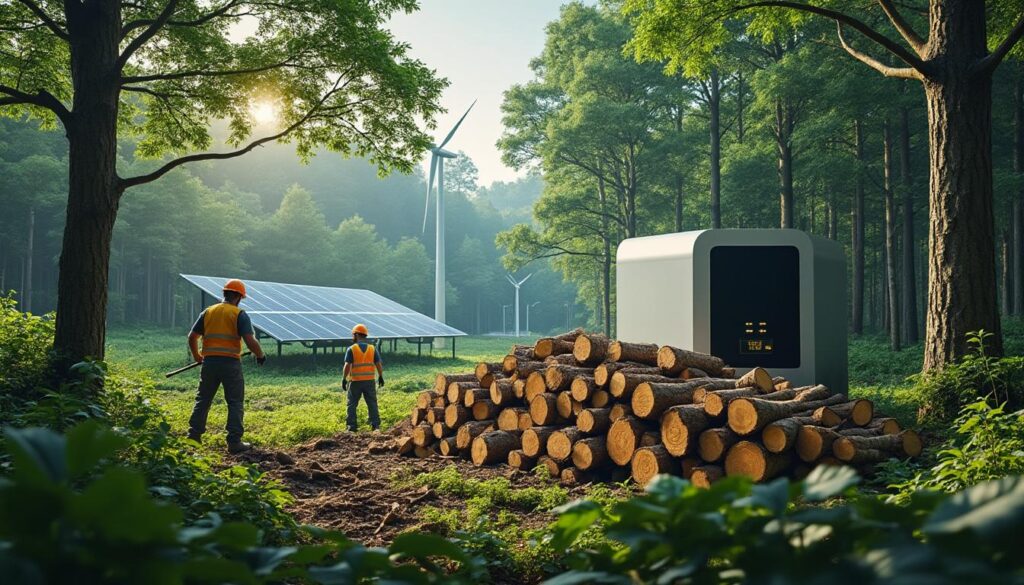
Renewable energies are already leading the way, but they hide technical, economic, and social dilemmas that need to be addressed with clarity. This practical guide shows you where the sensitive points are and how to transform them into smart solutions in your home and community.
| Short on time? Here are the essentials: |
|---|
| ✅ Plan flexibility before power ⚡ — combine production, storage, and consumption management to reduce costs and emissions. |
| ✅ Use real data 📊 — monitor loads, time patterns, and seasonality to size panels, batteries, and dynamic contracts. |
| ✅ Avoid isolated decisions 🧩 — integrate thermal comfort, materials, and efficiency; the home is a system, not a collection of parts. |
| ✅ Share benefits 🤝 — energy communities and local agreements reduce conflicts and accelerate the transition. |
Intermittency and variability: the invisible side of wind and sun
The wind changes, the clouds pass, and production oscillates. This alternation, which seems like a meteorological detail, is the first obstacle when trying to live off clean sources without sacrificing comfort. In 2024, 71% of the electricity consumed in Portugal was renewable, with hydroelectricity leading (about 28%), followed by wind (27%), solar (10%), and biomass (6%). However, when looking at all the energy used (transport, heat, industry), the renewable share drops to less than 40%, mainly because mobility still depends on fossil fuels.
This reality explains why balance solutions are still necessary: support plants (today mainly natural gas, since the closure of the last coal plant in Pêgo in 2021), storage, and demand management. If someone turns on a heat pump at 8 PM in a neighborhood with dozens of electric cars charging, they feel it in their bill and sometimes in the reliability of the grid. The answer is not to give up on renewables, but to intelligently anticipate their variability.
How to transform variations into useful predictability
There are three keys that work even in average homes. First, diversify sources: a small photovoltaic system, combined with an efficient thermal accumulator, compensates for quick clouds with heat stored in water. Second, shift consumption: clothes can be washed at 2 PM when the sun is strong, and water heating can be anticipated for noon. Third, measure and automate: smart plugs and an energy meter in the electrical panel create routines that follow the weather and the hourly tariff without daily effort.
In the Condomínio das Laranjeiras in Setúbal, residents agreed on an “energy good neighbor code”: those with garages that have programmable charging occupy first the slow charging spots during solar hours, leaving fast chargers for nighttime emergencies. The result was a visible drop in the evening peak and, pleasantly, less noise from inverters making aggressive ramps.
- ☀️ Schedule thermal loads (Hot water, underfloor heating) for solar hours.
- 🌀 Use night ventilation in summer to pre-cool the house and relieve the air conditioning at peak times.
- 🔌 Charge the electric vehicle between 11 AM and 4 PM when possible.
- 📈 Adopt dynamic tariffs and set price alerts on your mobile.
| Strategy ⚙️ | Benefit 🎯 | Complexity 🧠 | Impact on the bill 💶 |
|---|---|---|---|
| Consumption shifting | Lower peaks and more solar utilization | Low 🙂 | Medium to high ⬇️ |
| Thermal storage | Stable comfort even with clouds | Medium 🤓 | Medium ⬇️ |
| Smart EV charging | Integration with production and tariffs | Medium 🤖 | High ⬇️⬇️ |
| Shared self-consumption | Balance among neighbors and less losses | Medium-High 🧩 | High ⬇️⬇️ |
The essential is simple: plan flexibility before power. By doing so, variability ceases to be a “problem” and becomes an opportunity to pay less and live better.
Energy storage: batteries, hydrogen, and heat without myth
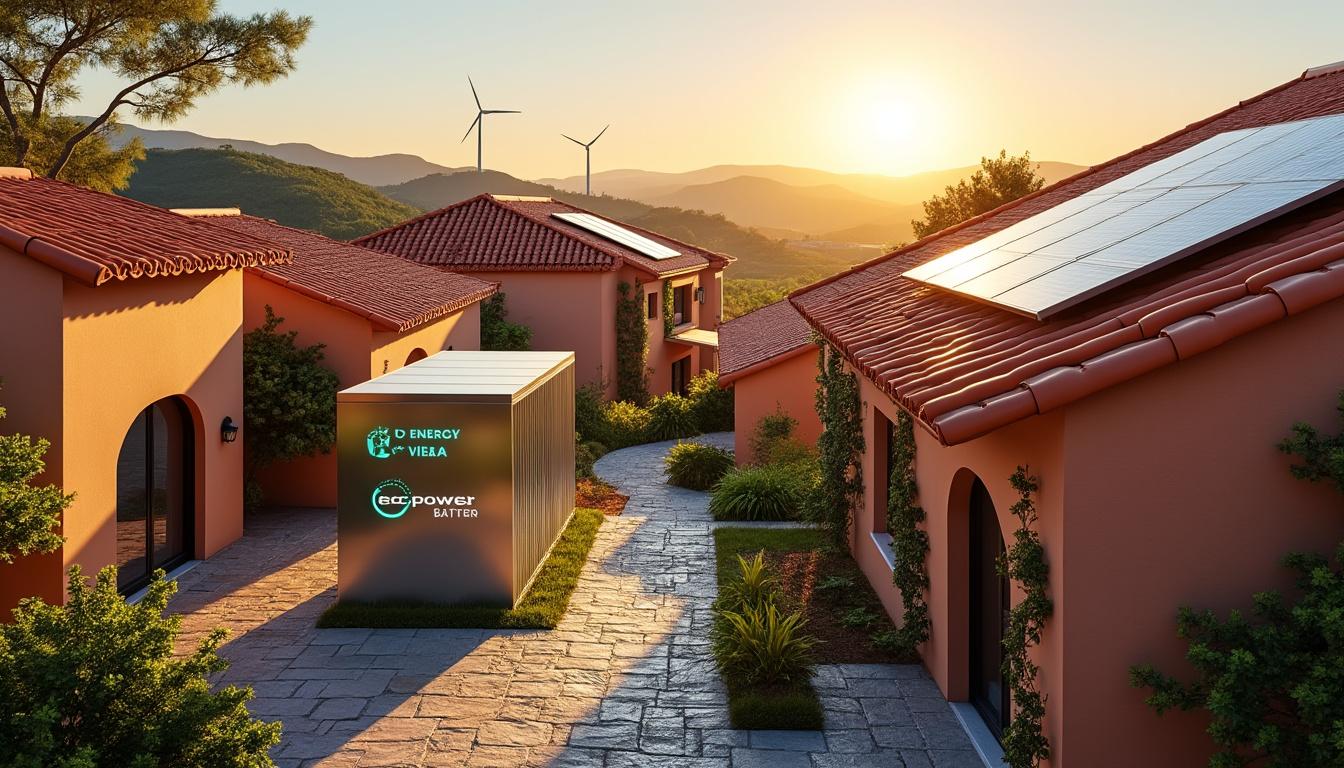
Storage is the “insurance” of renewables. But not all insurance is the same, nor does it serve the same situations. In homes and buildings, the most relevant trio is batteries, thermal storage (water or phase change materials), and, for specific or community uses, green hydrogen. The choice should be based on required duration (hours vs. days), daily cycles, and safety, not on technological trends.
Lithium batteries are excellent for 2–6 hours of autonomy and integration with hourly tariffs. When the goal is “to transport the sun from noon to late afternoon,” they work very well. For thermal comfort, a thermal accumulator of 200–300 liters is often the “battery” that is cheapest and most resilient. And for longer bridges (cloudy weekends), collective solutions like hydroelectric pumping or heat storage in larger tanks become competitive.
What to choose for your reality
Ask: “Do I want to store electricity, heat, or both?” If the house uses a heat pump and has panels, storing heat during the day reduces electrical needs at night. If there is an electric car, the vehicle’s battery can serve as a smart consumer, absorbing solar surpluses and charging more slowly when prices drop. In neighborhoods with many solar roofs, a shared battery simultaneously reduces peak demand and local wiring losses.
In Monte da Ribeira, a small village created a thermal “energy bank” in an isolated community tank that feeds the underfloor heating of three houses. When it rains for two consecutive days, comfort is maintained without switching on expensive electric resistances. This is not futurism: it is simple engineering, scaled to the place.
- 🔋 Home battery: useful for short peaks and hourly tariffs.
- 🌡️ Smart thermal accumulator: heat water with the sun and use it at night.
- 🚗 Car as flexible load: schedule low current during cheap hours.
- 🏘️ Community storage: lower costs per kWh useful and more resilience.
| Technology 🔧 | Time window ⏱️ | Typical application 🏠 | Attention points 👀 |
|---|---|---|---|
| Li-ion battery | 2–6 h | Daily self-consumption | Temperature, cycles, end of life ♻️ |
| Insulated hot water | 6–24 h | Sanitary waters / underfloor heating | Dimensioning and stratification 🧪 |
| Hydroelectric pumping | Days | Regional scale | Local impact, permits 🌿 |
| Green hydrogen | Weeks | Industrial uses / heavy mobility | Efficiency and safety 🧯 |
A prudent decision begins by measuring: how many kWh are left at noon, and how much energy does the house need between 6 PM and 10 PM? With these numbers, storage ceases to be a “gadget” and becomes the piece that completes the puzzle.
Infrastructure and grid: cables, inverters, and microgrids that avoid surprises
The transition does not happen only on the roof. The neighborhood electric grid, the building inverters, and the technical panels determine whether energy flows stably or if cuts and penalties arise. When many shift from gas to electricity — pumping heat, charging cars, and cooking with induction — the total current on the street rises, and the transformer capacity becomes critical.
What to do? First, avoid blind investments: before requesting an increase in contracted power, it is worthwhile to flatten consumption with automation and storage. Second, invest in smart inverters with programmable export limits to avoid overloading the grid at noon. Third, coordinate with neighbors for shared self-consumption, linking essential loads (pumps, elevators, refrigeration units) to periods of higher local production.
Microgrids and more resilient neighborhoods
In Matosinhos, a commercial block implemented a microgrid that manages priorities: frozen warehouses receive solar energy first, offices adjust climate control by 1 °C, and charging plugs enter slow mode when the cloud is persistent. The practical effect was to reduce peak power calls and save on cable reinforcements that would cost much more.
The same principle serves a residential condominium: a simple PLC in the common panel orchestrates water pumps, garage lighting, and chargers. No “high mandatory technology”; the secret is to define clear rules for when the available power drops and when it returns.
- 🧭 Map critical loads (pumps, security, ventilation) and protect them.
- 🔄 Install priority control in high-consumption circuits.
- 🛰️ Synchronize inverters and limit export according to the local grid.
- 🤝 Coordinate with the operator before major power changes.
| Measure 🧰 | Objective 🎯 | Relative cost 💸 | Risk avoided ⚠️ |
|---|---|---|---|
| Load manager | Avoid simultaneous peaks | Low | Tripped circuit breakers 🚫 |
| Inverter with export limit | Protect neighborhood grid | Medium | Penalties and cuts ⛔ |
| Shared self-consumption | Utilize local surpluses | Medium | Losses and overloads 🔌 |
| Real-time monitoring | Detect anomalies | Medium | Prolonged failures 🕑 |
A well-tuned grid is both engineering and common sense. If the infrastructure thinks like a conductor, the orchestra of loads, panels, and batteries plays in tune, even when the weather improvises.
Socio-environmental impacts and energy justice: the costs that don’t appear on the bill
Renewable does not mean zero impact. The space occupied by wind and solar parks, lithium extraction and other minerals, waste from end-of-life equipment, and changes to river ecosystems by dams are realities that require careful planning and shared benefits. When communities feel that they gain from the transition, acceptance rises; when they sense that they lose landscape and peace with no return, conflicts arise.
A just installation seeks the right place, the right size, and the right compensation. In Alentejo, a solar developer created a fund for thermal insulation of old houses in a neighboring village: fewer heating needs, lower bills, and less emissions from poorly burnt wood. The same solar energy, but with benefits reaching people’s doorsteps.
How to reduce impacts and share value
There are practices with strong consensus: prefer already anthropized areas (industrial parks, slopes, rooftops), install ecological corridors between rows of panels, adopt collection and recycling programs for panels and batteries, and establish sharing agreements with the local population (tariff reductions, revenues for collective facilities, employment priority).
It is also essential to think about energy equity. Low-income families tend to live in less efficient homes and pay proportionally more for energy. Well-designed energy communities can reverse this logic, offering a fraction of production at an affordable price and supporting insulation improvements that reduce base consumption.
- 🌱 Install in already intervened areas and preserve sensitive habitats.
- ♻️ Plan for circularity (recycling of panels, batteries, and cables).
- 🤝 Create tangible benefits for neighbors (local fund, social tariffs).
- 📢 Transparent communication from the first draft of the project.
| Issue 🌍 | Good practice ✅ | Shared benefit 🤲 | Success indicator 📏 |
|---|---|---|---|
| Land use | Prefer rooftops and degraded areas | Less conflict and more acceptance 🙂 | % in anthropized areas |
| Biodiversity | Corridors and habitat management | Resilient fauna 🐦 | Annual monitoring |
| End of life | Collection/recycling contracts | Less waste ♻️ | % recovered materials |
| Tariff justice | Social quota in energy communities | Lower bills for the vulnerable 💚 | Number of families covered |
If the energy transition is also a transition of justice and quality of life, renewable projects cease to be “someone’s” and become “everyone’s.” That is the true accelerator.
Economy and politics: tariffs, incentives, and models that protect your wallet
The numbers dictate terms. The way electricity is bought and sold, the available incentives, and the signed contracts determine whether a project is robust or fragile. In Portugal, the expansion of renewables in electricity has been remarkable and surpasses the averages of the EU and the world, but total energy still has a way to go — especially in transport. For families and small condominiums, the most profitable decisions combine self-consumption, efficiency, and tariff management.
Three common mistakes are: sizing panels “by the roof, not by consumption”; ignoring hourly tariffs; and underestimating that every kWh not consumed is the cheapest and cleanest of all. In parallel, models like collective self-consumption and energy communities allow neighbors to share production and create economies of scale in batteries and maintenance.
Contracts that align technology with behavior
Contracts with dynamic prices provide clear signals: when there is a lot of wind and sun, cheap electricity encourages washing clothes, heating water, and charging the car. When supply is scarce, prices rise, and the house “breathes.” With simple automation, this dance happens on its own. For those wanting stability, there are hybrids: a fixed part for essential needs and a variable part for flexible loads.
Partnerships with local businesses can enable neighborhood PPAs (power purchase agreements), where a large roof sells at a predictable price to residents. And platforms like Ecopassivehouses.pt help think of the building as a complete system, saving costly mistakes.
- 🧾 Review the bill and switch to hourly tariff if the profile fits.
- 🧮 Size by real consumption (12 months) and not by roof area.
- 👥 Consider collective self-consumption to share fixed costs.
- 🛠️ First efficiency (insulation, windows, air leaks), then power.
| Model 💼 | For whom? 👤 | Advantage 🌟 | Risk/Note ⚠️ |
|---|---|---|---|
| Individual self-consumption | Detached house/isolated unit | Simple and straightforward 🙂 | Surpluses may have low value |
| Collective self-consumption | Condominiums | Better use of solar peaks 🧩 | Requires management and clear rules |
| Energy community | Neighborhoods/villages | Scale and social inclusion 🤝 | Governance and permits |
| Local PPA | Entities with large roofs | Predictable price 💶 | Long-term contract |
When the financial strategy aligns with the technical, the project stops relying on “the weather outside” and starts responding to a plan with clear metrics. That is the sign of maturity that reduces risks and increases peace of mind.
Buildings that store energy: efficiency, materials, and demand management
An efficient home is a silent “battery.” Well-insulated walls, thermally broken windows, movable shading, and controlled ventilation reduce temperature fluctuations and the need for electrical power. In climates like Portugal’s, improving the envelope can reduce 30–60% of heating/cooling needs, which alleviates the intermittency of renewables without installing more panels or batteries.
Materials with thermal inertia — like clay plasters, dense masonry, or slabs with mass — dampen heat peaks. Well-designed shadows and automated blinds respond to radiation sensors to limit solar gains during hours of higher photovoltaic production, shifting loads to when there is abundant clean energy. Demand management is not just about “turning off lights”; it is orchestrating comfort.
Concrete actions that make a daily difference
If your home has heat pumps, schedule the “boost” between 12 PM and 4 PM on sunny days. If you use dehumidification in winter, turn it on when the panels produce more, as dry air requires less energy to heat. And whenever possible, use efficient electrification: induction plates, A+++ machines, and high-quality LED lighting.
At Casa da Vinha, near Évora, combining well-executed insulation, automated blinds, and a 300 L thermal accumulator reduced the night peak by 40%. The owner did not increase the contracted power, but synchronized the house with the sun. Result: lower bills and more stable comfort.
- 🏗️ Strengthen the envelope (insulation, airtightness, window frames).
- 🌞 Automate shading with simple sensors.
- 🧊 Use thermal inertia to “store” coolness or heat.
- 📲 Create hourly scenes in your home automation system.
| Solution 🏠 | Energy function 🔋 | Integration with renewables 🌤️ | Practical outcome ✅ |
|---|---|---|---|
| Insulation and airtightness | Less losses | Less dependence on peaks | Constant comfort 🙂 |
| Thermal inertia | Store heat/cold | Shifts consumption | Lower peaks ⬇️ |
| Automation | Demand management | Follows sun and tariffs | Optimized bill 💶 |
| Efficient equipment | Less kWh per service | More self-consumption | Longer lifespan 🔧 |
The building is the basis of everything. By treating it as an “energy organism” that breathes with the climate and the grid, the dilemmas of renewables cease to be a burden and become opportunities for comfort and savings.
Immediate action: choose today a piece of equipment or routine to automate during solar hours (thermal accumulator, washing machine, or EV charging). A small adjustment, repeated every day, changes the consumption curve and transforms your home into an ally of renewable energy sources 🌞.
Source: www.publico.pt